

Selecting a rug for your space can be a challenge. You have to consider factors like available space, color, style, material, thickness, and so much more. Luckily for you, Gardner White has your back with this comprehensive Rug Buying Guide!
Last Updated: October 25, 2023

The Importance of Rugs
A rug anchors the room and pulls all the furniture together. They have a large impact on creating a warm and inviting atmosphere. Having a rug also ensures that you are protecting your flooring from excessive traffic, and your feet from walking on a cold surface when barefoot.
Having rugs throughout your house is also cheaper than carpeting the entire house. They dampen the sound when people are walking on them, and they’re easy to clean and maintain. Plus, if you should ever need to replace a rug, they are much more affordable than any other flooring option.

The Different Types of Rugs
There are so many different shapes, colors, patterns, sizes, and types of rugs that listing them all here would be next to impossible. However, the good news is that you can easily whittle down your rug options by knowing the color palette of your home, the available space in the room, and the shape that will work best.
Types of Rugs by Material
Rugs are made from a wide variety of materials and are generally broken out into two classifications based on construction: natural fiber rugs, and synthetic fiber rugs. Below are some examples of the two construction types:
Natural Rugs

Wool rugs are one of the oldest and most traditional styles of rugs. Humans have been using wool to create textiles for thousands of years. This all-natural material is durable, warm for your feet, accepts dyes well, and it can be woven into innumerable different patterns. Wool rugs are known for their softness, warmth, and excellent insulation properties. They come in a wide range of designs and are often blended with other natural fibers for added durability. The only downside is that they can sometimes be a little difficult to clean and maintain.

Cotton rugs are another type of natural fiber rugs. The abundance of cotton, its cheaper production, the fact that it can be dyed in countless colors, and its durability make it a very suitable material from which to create rugs.
Cotton rugs last for a very long time thanks to their durability. They’re easy to clean and maintain, and they stand up to many years of use. In some cases, the all-natural rugs are machine washable as well!
Other natural fiber rugs are made from materials like silk, jute, seagrass, bamboo, leather, sheepskin, and cowhide.
Synthetic Rugs
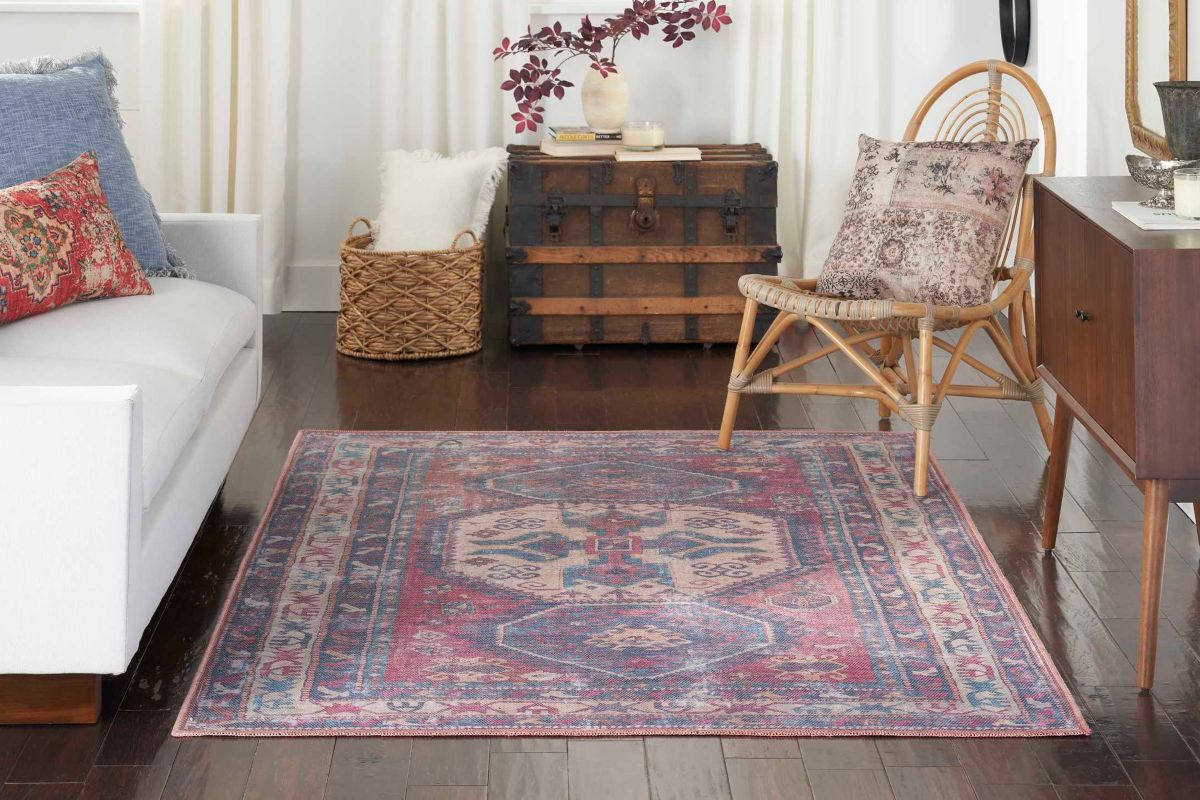
Polyester dominates as the most prevalent synthetic material utilized in rug construction, offering versatility, durability, and the ability to be produced in any color of the rainbow! It was first used in the construction of rugs in 1965 according to this article from The Carpet and Rug Institute. The good news about polyester is that it looks great no matter what style of rug.
Most polyester rugs are machine washable which makes keeping them clean much easier. However, be sure to read the care instructions on each rug’s tag. Some rugs cannot be run through the dryer.
Other types of synthetic rug materials are nylon, polypropylene, faux fur, and viscose.
Rug Sizes
The available size of rugs is nearly endless. The good news is that there are also standard sizes that most rug manufacturers adhere to for commonality. Here’s a short list of the most common shapes, and measurements of rugs:

- 8′ X 10′ Area Rugs
- 5′ X 7′ Area Rugs
- 2′ X 3′ Placemat Rugs
- 4′ X 6′ Area Rugs
- 6′ X 9′ Area Rugs
- 9′ X 12′ Area Rugs
- 10′ X 14′ Room Rugs
Choosing the Right Size Rug
Knowing the available rug sizes is only the first step, now you need to know how to choose the right size rug. A common mistake made is the assumption that you only need to carpet for the area with foot traffic. This is wrong because it increases the potential for tripping hazards and the aesthetic leaves a lot to be desired (see below).

Step-by-Step Instructions For Choosing the Right Sized Rug
Time needed: 15 minutes
How To Choose The Right Rug Size
- Measure the room.
Use a tape measure to determine the dimensions of the room. Note down the length and width of the area where you intend to place the rug.

- Consider the furniture layout.
Visualize how you plan to arrange the furniture in the room. This will help you determine which areas of the floor you want to cover with the rug. Think about whether you want all the furniture legs on the rug or just the front legs.

- Leave space around the rug.
It’s generally recommended to leave a border of flooring visible around the rug. This helps create a well-proportioned look and prevents the room from feeling cramped. Aim for a border of 12-18 inches (30-45 cm) between the rug and the walls.

- Choose the right rug shape.
Consider the shape of the room and the furniture within it. Rectangular or square rugs are versatile and work well with most furniture arrangements. Round or oval rugs can soften the angles in a room and are ideal for circular dining tables or seating areas.

Colors, Shapes, Patterns, & Designs
The fun part about selecting a new rug for your home is sorting through all the different colors, shapes, patterns, and designs available to you! You’re guaranteed to find the right rug for your space since your options are nearly limitless. On the other hand, having so many options can be overwhelming and cause confusion.
Here are some basic tips when it comes to the type of rug that you choose:
Colors
- Consider the color scheme of the room: Choose a rug that complements or contrasts with the colors already present in the room. You can opt for a rug that matches the dominant color or choose a contrasting color to create visual interest.
- Assess the mood and ambiance: Colors can evoke different emotions and set the tone of a space. For a calming effect, consider cool tones like blues and greens, while warm tones like reds and oranges can create a cozy atmosphere.
Shapes
- Evaluate the room layout: Take into account the shape of the room and the furniture arrangement. Rectangular rugs generally work well with rectangular or square rooms, while round rugs can soften the look of angular spaces.
- Consider the purpose: Different shapes can serve different purposes. A long runner can enhance a hallway or corridor, while a circular rug can create a focal point in a seating area.
Patterns & Designs
- Balance with existing patterns: If your room already has prominent patterns, choose a rug with a simpler design to avoid overwhelming the space. Conversely, a bold patterned rug can add excitement to a room with more subtle décor.
- Scale and proportion: Consider the size of the room and the furniture when selecting the pattern size. In a small room, a large pattern may overpower the space, while a small pattern may get lost in a larger room.
Additional Tips
- Sample before committing: If possible, get a sample or swatch of the rug to see how it looks in your space before making a final decision. Lighting and other elements can affect how colors and patterns appear in different environments.
- Consider maintenance and durability: Depending on the location and foot traffic in the room, choose a rug material and construction that can withstand the intended use and is easy to clean.
Ultimately, the choice of a rug should reflect your personal style and preferences while harmonizing with the overall aesthetics of the room.
Budget
Rugs run the gamut of pricing, from very inexpensive to thousands of dollars. Be sure to know exactly what you intend to spend on a new rug for your home prior to shopping. This will help you weed out options outside of your budget thereby helping you to not fall in love with the perfect option that costs more than a car!
Additional Considerations
Aside from the rug itself, there are several other considerations that you need to focus on when selecting that new rug. Ask yourself if you need rug padding or non-slip options, or if you prefer a sustainable product. Should you also purchase a cleaning product specially formulated for your new rug? Do you already have a vacuum that will work on the new rug? It’s a wise idea to consider all aspects of the rug’s life when shopping for a new one!
Frequently Asked Questions About Rugs
Gardner White! We have the largest in-stock selection of area rugs in Michigan!
The most common method is in a textile factory on an industrial loom. This is how most rugs are created. Some others are handmade on small looms, or tied entirely by hand.
Yes. However, the method of how they are washed differs based on the materials used in their construction. For instance, a wool rug cannot be washed in a machine, it must be washed by hand. The safest bet is to follow the care instructions on the tags attached to the rug.
Need More Help?
You can contact one of Gardner White’s experts at (248) 481-2208, chat with one online, or visit one of our local Michigan stores.